




About Bali
One of the smallest, but perhaps the most extraordinary, islands, in the world! Bali is part of the Republic of Indonesia and is in the Indonesian Archipelago. It has an area of 5.632,86 square kilometers. Bali is divided into 9 districts: 8 regencies (Badung, Gianyar, Tabanan, Klungkung, Karangasem, Buleleng, Jembrana and Bangli) and one municipality Bali. Bali comprises of several smaller islands, Nusa Penida, Nusa Ceningan, Nusa Lembongan, Serangan Island and Menjangan Island. There are lots of mountains and lakes. The most important mountains, which are also volcanoes, are Gunung Agung and Gunung Batur and the most important lakes are Beratan, Buyan, Tamblingan and Batur. Bali’s capital city is Denpasar. It is a cluster of high volcanoes, their craters studded with serene lakes set in dark forests filled with monkeys. Bali's original charm is still much in evidence, its stunning temples & spectacular festivals set off by the gorgeously lush landscape. Bali's most famous & crowded resort is Kuta, a sweep of golden beach, with plenty of villas and nightlife. Nearby Sanur area is quieter. Bali is also known as island of God and is famous for their heritage Balinese culture, arts, crafts and also its people.
The highest point of Bali island is Mount Agung at 3142m high. Bali's major destination is the cultural center of Ubud, where traditional dances are staged every night of the week and the streets are full of arts-and-crafts galleries. The island is surrounded by coral reefs.

Custom Tours by Bali 4 Ever
About Indonesia
Indonesia is a country situated in the Southeast Asia. Four fifths of the area is sea. It consists of 17.508 islands.
The major islands are: Sumatera, Java, Kalimantan, Sulawesi and Papua. The capital city is Jakarta. The population of Indonesia is over 250 million people that makes it the fourth most populated country. It borders with Papua New Guinea, East Timor, Malaysia and neighbors also with Philippines, Australia and Singapore. Indonesia got its name from the Latin word ‘’Indus’’ which means India and the Greek word ‘’Nesos’’ meaning island.
The flora and fauna of Indonesia is a mixture of Asian and Australian species. Forests cover almost 60% of the country. When getting in Indonesia you will smell the beautiful odors of the different kind of flowers. Jasmine, water lily, magnolia and orchids are some of the species that you will find in the offerings to the Gods, at the temples and at the gardens. Moreover there are many kinds of coconut trees and bamboos. As for fauna Indonesia has to offer large variety of Asian species like tigers, elephants, rhinoceros’, orangutans and over 600 kinds of birds. Of course not forget to mention the rich sea and coastal ecosystems with colorful coral fish and coral reefs.
Wonderful Indonesia:
A Visual Journey
Indonesian History
Indonesia is a democratic republic. It is divided into 32 provinces and four geographical groups. The first is Greater Sundas consisting of Sumatra, Java, Kalimantan and Sulawesi. The second is called Lesser Sundas and includes Bali until Timor. The third group, Maluku, is the islands between Irian Jaya and Sulawesi and the forth is lrian Jaya the eastern part of the country. Indonesia was a Dutch colony until World War II. President Sukarno was Indonesia’s founding President. However Major General Suharto’s New Order administration led to the major economic growth, encouraging foreign investments in Indonesia. The East Asian Financial Crisis hit Indonesia though something that led to Suharto’s resignation.
Bali - Cuisine and restaurants
There is a place to eat for every budget. From fine and luxurious restaurants to small food stalls. Most restaurants in Bali are open until 22:00-23:00 but in touristic areas, especially in Kuta, there many of them that stay open until 24:00-01:00 or even in a 24h basis. For those you can’t eat Balinese cuisine, there are big international food chains like KFC, McDonald’s and Pizza Hut.
Some of the best recommended restaurants where you can find traditional Indonesian and International food are; Made’s Warung, Ibu Oka, Wahaha, Bebek Eropa, Mamas Chandi, Ultimo Oberoi, Char Char in Seminyak, the famous Fish restaurants in Jimbaran, Sundara Bali in Jimbaran, Eco Beach fish boufet, The Kampung Resort in Tegallalang, Lotus Caffe in Ubud and for romantic dinners you should definitively go to La Lucciola and Mosaic Ubud. In these places, the prices of a meal per person vary from 5-20 USD.
In restaurants you’ll pay for a large bottle of local beer (0,5 l) between 2,5 and 5$ (plus plus (++), means plus 10% tax and 5-11% service charge in hotels and some restaurants). A small glass of mediocre Australian table wine costs 4 to 6$. Prices for a bottle of any better wine start between 25 and 45$, depending on where you are. Prices for wine and champagne in many hotels are outrageous compared with Western countries. Import taxes on Liquor and wine are quite high.
The good news is that the choice of available wines from Australia, California, Chile, France, Italy, New Zealand, Portugal and South Africa has recently increased. If you think the prices of these imports are too high, you should at least try the HATTEN wines, made from grapes grown in North Bali and sold in restaurants for 15-20$ per bottle.
Most foreigners like the local BINTANG beer. Many restaurants and pubs also serve BINTANG “draft”. Other popular beers are ANKER, CARLSBERG, SAN MIGUEL, STARK and BALI HAI beer. Balinese enjoy their home brewed Arak, Tuak, and Brem. It is a tradition that in all villages the men meet sometimes in the evening in where they discuss the news of the day and get slowly high (or low) on their rather potent home brews.
Tuak (about 5% alcohol) is a sweet palm wine made from the juice of the coconut palm flower which is stored for about one month for fermentation. Brem is made from black glutinous rice and coconut milk; the alcohol content is about 7% to 9% after three days fermentation. Most popular with foreigners is Arak: a colorless, sugarless spirit distilled from either Brem or Tuak with 20% to 50% alcohol content. A whole bottle costs about 5$, and it is usually served ‘on the rocks’ as “Arak Attack” or “Arak Madu” (Arak, lemon or orange juice, and honey). You should try it at least once.


The sacred Mount Agung
There is one mountain that is considered sacred by Balinese and that is Mount Agung. It is believed that the mountain was raised by the gods and is where you return when you die. When the gods are disappointed by the humans they ‘’wake up’’ the volcano and large amount of lava runs from it.
Legends circulate among locals on how the majestic mountain came to be. Some people believe that the mountain was first a part of Mount Meru brought to Bali by the first Hindus. Mount Meru is a sacred cosmological mountain that bears heaven on its summit, considered to be the center of all universes; physical, metaphysical, and spiritual.
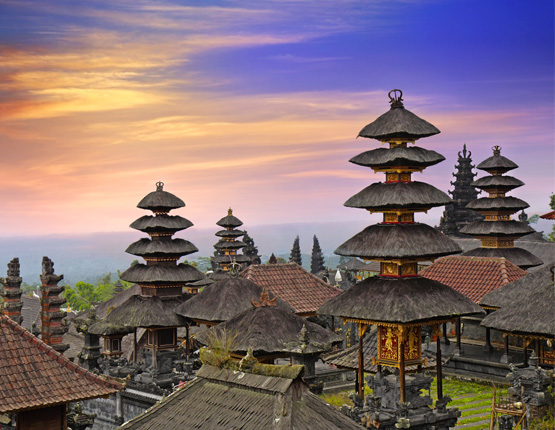
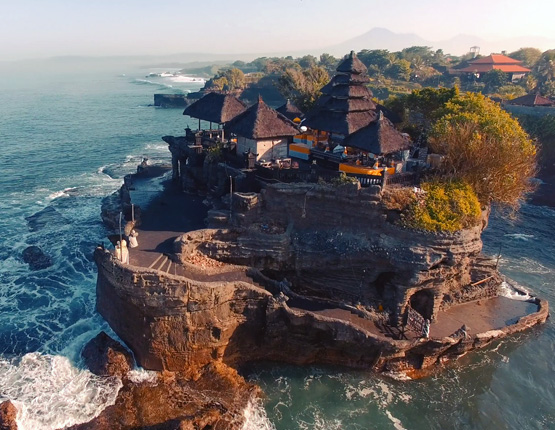
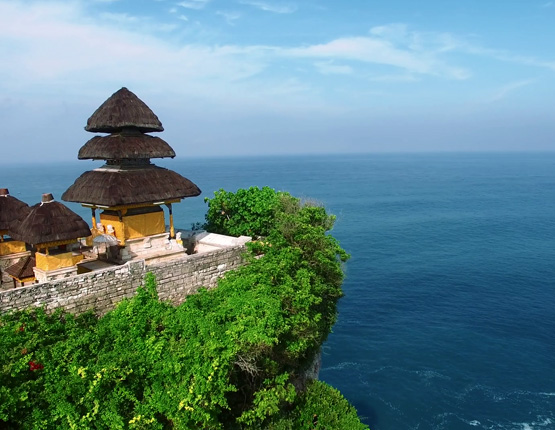
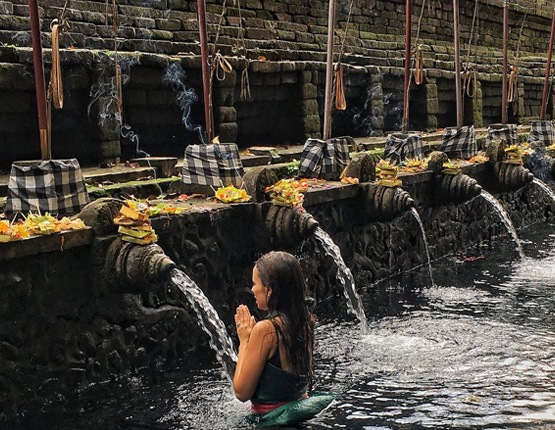
Bali Temples
Bali transportation
Numerous choices, however, public transportation should be excluded. The best choice is Car rental, especially for more than 1 person. Renting the car with a driver at your service for 8 hour per day. Renting a motorbike is really convenient but can easily be hazardous, too. Bicycles – cheap and flexible. Due to the fact that Bali is a small place you could get around by a bicycle.
Don’t forget to check the condition of the car, motorbike and bicycle before agreeing to rent it.
Taxi – Negotiate the fare
This is a usual trick to full the unsuspicious tourists. Bluebird taxi is the most trustful one.
Hospitals and clinics in Bali
Cheap paradise: Most foreigners find Bali extremely cheap and along with the beautiful scenery it is the perfect paradise for their pocket too.
Bali Accommodation
There are millions of Resorts, Hotels from all categories, as well as home stay and hostels, in where you can stay in Bali. Although the “all inclusive” type of vacations is not popular in Bali, every hotel, even the simplest one, has its own in-house restaurant where you can have each of your meals and all kinds of drinks, with very convenient prices. However, the island is very famous for offering accommodation in its amazing Villas. Bali villas are truly magical, offering luxury and privacy in the most peaceful of settings. Visitors can find a home away from home in the island’s upscale villa resorts or in private villas that cater to a wide range of budgets, and in styles that vary from hip and modern to regal and traditional.
The fully serviced villas that are the norm in Bali typically have their own cooks, maids, and drivers who care for their visitors’ every need, making sure that their vacations are perfect. All of the modern amenities can be found, including media centers with sound systems, widescreen TVs, and DVD players, fast Wi-Fi connections, and fully appointed international kitchens. Single travelers and couples can enjoy 1-bedroom or 2-bedroom villas, while families or groups can come together to enjoy an affordable vacation in a multi-room property, with separate incorporated bathroom each, with central dining and lounge areas. Villas in Bali have at least one private pool, where swimmers can look out over lush rice fields or quiet beaches, or just relax poolside with a drink.
Bali’s private villas and villa resorts are often surprisingly affordable, and many travelers prefer to share a rental villa rather than stay in separate hotel rooms.


Bali activities
Surfing: Bali is a surf destination. The waves are great and the temperature of the water perfect for surfing. Ideal for beginners and professionals, too. All year long surfers from all around the world visit Bali for surfing. Bali has many places where you can surf depending on you surfing skills. Bali best surfing spots are Kuta beach, Canggu and Uluwatu beach. For those you are animal lovers what better than to visit the Bali Zoo or Monkey Forest. Other choices are; “Waterboom” waterpark, Ubud Rafting Adventure, visit in the Tegenungan Waterfall, one day experience of Yoga & Meditation in a specialized cener, Agro tourism visit in the plantations of the most expensive coffee “Luak”, Diving in the marvelous underwater of Amed, Nusa Lembongan and Nusa Penida, two side to side islands, Sanur Golf Club for golf lovers or visiting a Balinese Shaman or traditional healer, swimming with Benoa Dolphins, Uluwatu or Tanahlot Temple visitand Kecak traditional Balinese Dance Show.
The most interesting Museums to visit are: Blanco Renaissance Museum (entry fee 4$), Denpasar Museum (entry fee 4$). Other galleries are Sumertha Gallery, Made Ada Gallery Agung Rai Museum of Art, Bamboo Gallery and Gaya Fusion.
Useful tips when travelling to Bali
✅ It is prohibited to bring into Bali weapons, narcotics and explosive and pornographic material. As far as animals are concerned they are also banned because they are considered to a source of rabies. You are allowed to bring alcohol and tobacco, but in certain quantities. For alcohol you can bring at maximum one liter per person. As for tobacco, it is 200 cigarettes, 100gr of tobacco and 50 cigars. You can’t export over Rp 5.000.000 and national treasures like tortoise shell, crocodile skins and ivory.
✅ In Bali you drive on the left side of the road.
✅ If you take public means of transportation be aware of pickpockets
✅ Protect yourself from the intense tropical sun. Use of sun block, skin protection creams, sunglasses and a hat will help.
✅ When you are in Bali you should also never drink water that it isn’t bottled.
✅ Most prices in restaurants are ++, this means that 11% tax (VAT) and between 5 to 10% service charge is added. If there is no service charge, a tip of 5% or 10% is appreciated but not necessarily expected.
✅ Exchange tips: Some money changers consistently try to short-change their customers and you should make a habit of checking the money carefully once and twice and make sure that they are correct before leaving. Authorized money changers usually offer better deals to change cash or traveler's checks (traveler’s cheques) than hotels or banks. Have a calculator yourself, so that you are certain that the exchanger is giving you the right exchange. Furthermore, calculate in advance the money that you expect to receive. Also don’t accept torn or old banknotes otherwise they will be stuck on you. Notice that there are old and new kinds of banknotes. Last but not least don’t exchange a large amount of money. Exchange a small amount. Be careful of your money, don’t show them off and be aware of pick-pockets.
✅ Bargain: In small shops and open markets you should bargain for a better price. You may save a lot of money up to 50%. However, when it comes to bargaining, it’s best to be friendly. Bargain hard but don’t get angry or pushy, and don’t make insulting jokes. You will get nowhere, and might get in an argument. While in big shops and supermarkets the prices are fixed.